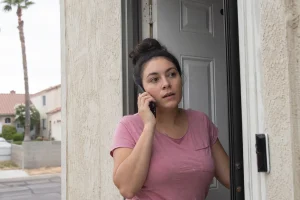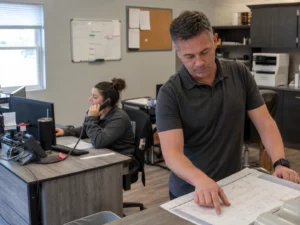

A professional first phone experience gives home-service customers a clear greeting, room to explain the problem, and a next step they can trust. The person answering should collect the details needed to help, explain whether an appointment is confirmed or still pending, and say how the customer will hear back without promising work the business hasn't approved.

Treat the call as part of the service
A customer may call while water is leaking, a door won't close, or an appliance has stopped working. They need to understand what your business can do next. A friendly voice helps, but friendliness alone doesn't settle that question.
Housecall Pro's 2020 customer experience guide places customer experience before the job itself and connects it with trained staff and convenient technology. That remains a useful way to judge your phone process. The call should leave both the customer and your team ready for the next action.
Start with the business name, then listen
Use a short greeting that tells callers they've reached the right company. Give the receptionist room to sound natural rather than requiring a long opening speech.
A sample opening is, “Thanks for calling [Business name]. How can I help you today?”
Let the caller finish their first explanation before moving through questions. Then briefly reflect the need back to check that you understood it.
For returning customers, check the existing job record when it's available. Ask what has changed rather than making them repeat the full history. If a transfer is needed, pass the notes along so the next person has that context.
Capture only the details that help the team act
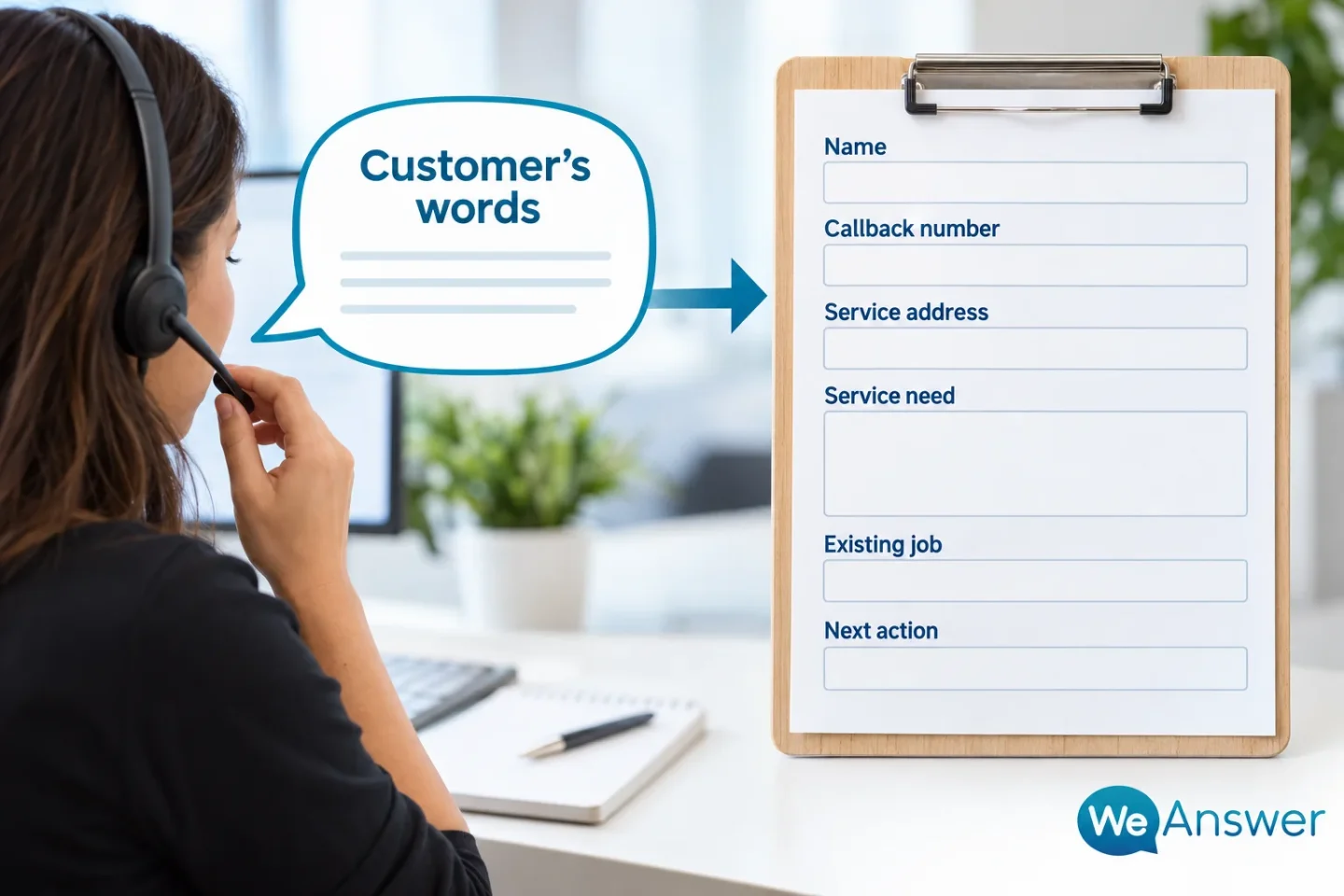
A short intake form keeps the conversation focused. Use the same core fields across office staff, field crews, and anyone answering calls outside office hours.
-
The caller's name and a reliable callback number.
-
The service address, including a unit number when needed.
-
The service need in the customer's own words.
-
Any existing appointment or job the call relates to.
-
The action needed from the person receiving the message.
Separate what the caller reports from what your team has verified. “The customer reports no heat” doesn't establish which part needs repair. The receptionist's job is to capture the concern, not diagnose it.
Keep payment card numbers and door codes out of general call notes. Use your business's approved process if sensitive details are needed.
Separate a request from a confirmed appointment
Booking language should match the actual calendar status. Use wording like the samples below only when your process supports it.
| Call outcome | What must be true | Clear wording |
|---|---|---|
| Appointment request | The requested time still needs approval. | “I've recorded your preferred time. It isn't booked yet.” |
| Confirmed appointment | An approved calendar slot has been reserved. | “You're booked for the date and time window we agreed on.” |
| Urgent callback | The message has followed your urgent-call routing rule. | “I've sent your request for urgent review. A visit isn't confirmed.” |
Before ending, read back the agreed next action and callback number. Give a callback window only if your team has approved it and can meet it. If timing isn't known, say so rather than turning a guess into a commitment.
Give urgent and after-hours calls clear limits
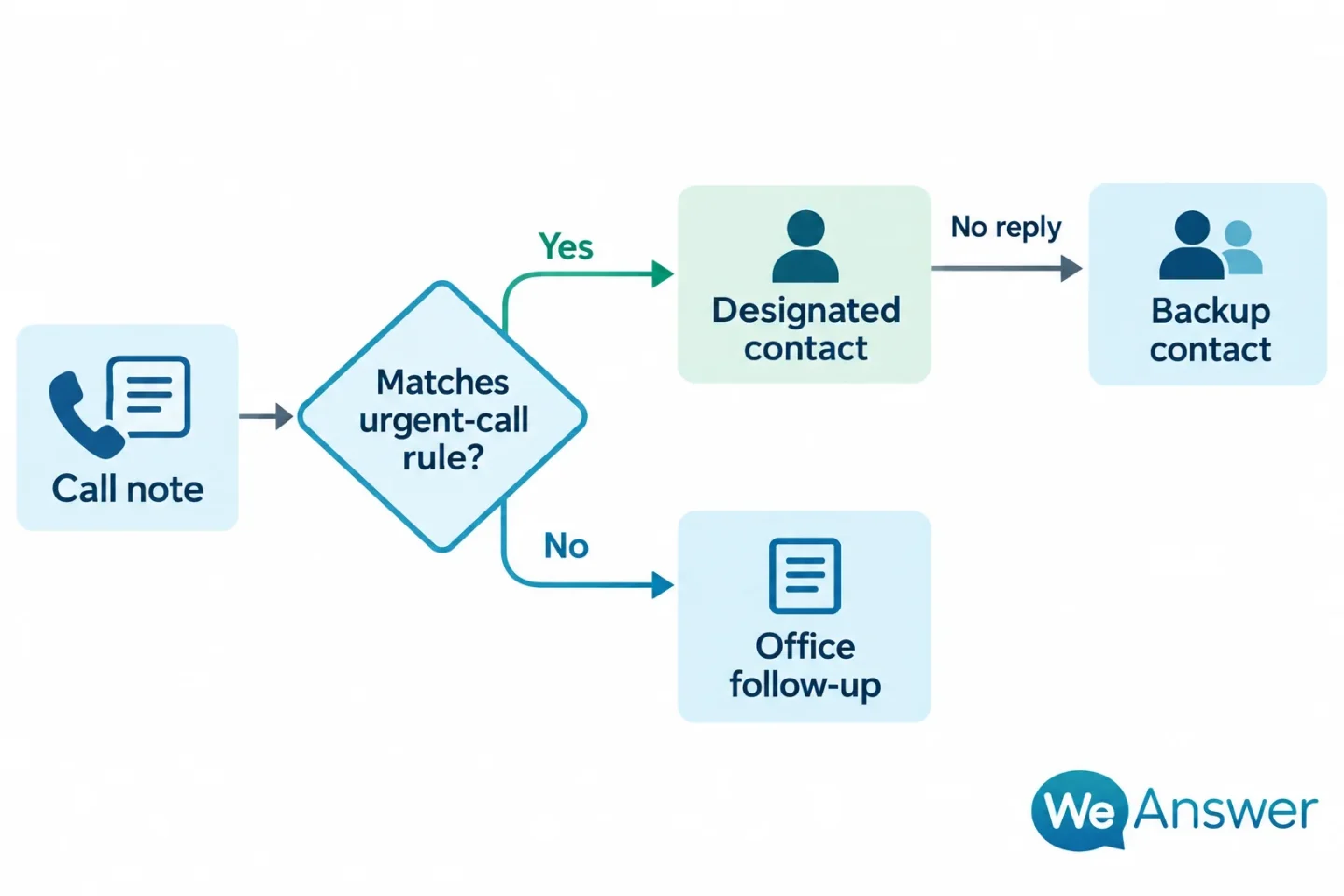
Live phone coverage doesn't establish that a crew is available. Your instructions should separate taking a message, contacting the person on duty, and approving a service visit.
Define which reported conditions trigger urgent review. Name the contact who receives those messages and the backup route if that person doesn't respond. Match the notification method to how that person works, whether that's a call, text, or email.
Keep urgent-call rules based on information the caller can report. Don't require the receptionist to decide which component failed or whether a system is safe to use.
Test the experience when the office is busy
Run planned test calls during lunch, evenings, weekends, and your busy season. Call through the same public number a customer would use. Have someone unfamiliar with your internal process review what they hear.
Check these points in a single review.
-
Does the greeting identify the right business?
-
Can staff find current service coverage, calendar rules, and schedule changes?
-
Does the message reach the correct person with usable details?
-
Is the promised follow-up completed?
Service Direct's 2019 call performance report treats answering, capturing customer information, and booking appointments as separate parts of phone performance. Review those outcomes separately. An answered call isn't automatically a complete message or a booked job.
Use each test to fix a specific gap. Assign someone to keep the script, calendar access, and contact instructions current.
Choose support that can follow your process
If crews or office staff can't consistently cover calls, compare help against the tasks you've defined. A message-taking service and a receptionist authorized to book approved calendar slots serve different needs.
We Answer's answering services for home-service businesses include 24/7 live reception, bilingual support, appointment scheduling, and message capture. Receptionists can answer in your business name, follow instructions, and send updates by text or email. Your business still needs to supply accurate scheduling rules and contact details.
Common questions about customer calls
To arrange call coverage for your home-service business, contact We Answer about live answering support. Share your call-handling needs and the tasks you'd like receptionists to manage.