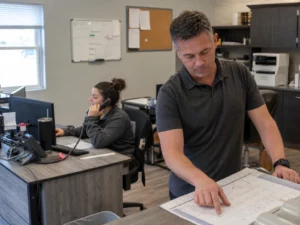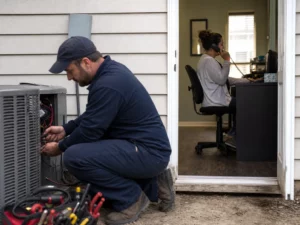

You should outsource call answering for a home service business when crews cannot reliably pick up, after-hours calls may turn into jobs, and a live team can follow your rules. Keep it in-house when calls need constant dispatch judgment or close office knowledge. Test the service with real calls before making a long-term change.

Start with the calls you miss
Before comparing providers, find out what happens when the phone rings. Do not rely on a busy-week memory. Check a normal two-week period and write down calls that went to voicemail, rang without an answer, or were returned late.
Then sort those calls by what the caller needed. A plumbing leak, a locked-out customer, a broken garage door, and a request for a future HVAC tune-up do not need the same response. This simple review shows whether you need live coverage, better routing, scheduling help, or a change in your own office process.
- Count calls during work hours, evenings, weekends, and holidays.
- Mark calls that were new job requests, current-customer questions, vendor calls, spam, or emergencies.
- Note who answered and whether the caller got a clear next step.
- Check how long it took for a technician or owner to receive the message.
- Look for calls that required details your team did not capture.
A missed call alone does not prove that outsourcing is the right choice. Some callers will leave useful voicemails. Others will call another company. Your own records can show the size and timing of the gap without guessing.
When to outsource call answering for a home service business
Outsourced answering fits best when the person doing field work is also expected to answer the phone. A technician cannot safely take a detailed call while driving, working on electrical equipment, or talking with a customer in a home. A live answering team can give callers a person to speak with while your crew keeps working.
It can also fit a business with uneven call volume. You may need help on nights, weekends, seasonal peaks, or during hours when the office is closed. A full-time employee may be underused during slow periods, while voicemail may leave too much work for callers.
Look for these signs before you move calls outside your office.
- Owners or technicians often stop work to answer routine calls.
- New callers reach voicemail after normal office hours.
- Your team has no clear plan for urgent calls.
- Scheduling, address details, or service needs are often incomplete.
- You serve callers who may prefer Spanish or another language your office cannot always support.
- Someone needs to take messages while your receptionist is away.
For a closer look at available service types, see Answering Services. The useful question is not whether every call should leave your office. It is whether callers can get the right response at the time they call.
Keep these calls with your own team
Outsourcing is a weaker fit when a caller needs someone who can make rapid, detailed decisions from live office information. That may include changing a packed dispatch board, approving unusual pricing, handling a complaint that needs a manager, or checking a job with special access instructions.
You can still split the work. An answering team can collect the caller’s name, address, problem, preferred time, and urgency. Your dispatcher can take over when the call meets a rule you set. This approach works only when the handoff rule is clear.
Build an urgent-call rule before calls are forwarded
Write down which situations need immediate contact and who gets that alert. Keep the wording plain. A caller reporting smoke, fire, or a trapped person should be told to call 911 first. A gas smell, active flooding, no heat in severe weather, or a lockout may need a different instruction based on your company’s service policy and staffing.
Give the service one current on-call list. Include a backup person, the best contact method, and when to stop trying. Review it whenever schedules change. An old number can turn a good call into a poor customer experience.
Compare the real choices before you decide
Most owners are weighing four paths. Each has a different cost, level of control, and limit on hours.
| Option | Works well when | Watch for |
|---|---|---|
| Owner or technician answers | Call volume is low and the caller needs direct expert help | Interrupted jobs, unsafe driving, and missed calls while working |
| Voicemail and call backs | Most callers are willing to wait and messages are checked on a set schedule | Vague messages and no live response after hours |
| In-house receptionist | Calls stay steady enough to fill scheduled work and the office needs close coordination | Breaks, absences, off-hour coverage, and added employment costs |
| Outsourced live answering | You need call coverage outside field and office availability without staffing every hour | Weak scripts, poor scheduling rules, or slow message delivery |
Pay attention to the full employee comparison, not only salary. The U.S. Bureau of Labor Statistics reported a national mean annual wage of $39,460 for receptionists and information clerks in May 2025. That figure does not include benefits, payroll taxes, hiring, training, equipment, time off, or coverage beyond scheduled shifts. Your local hiring market and the duties you expect will affect your own number.
Ask an answering provider how it bills before comparing costs. We Answer lists $2 per call lasting over 20 seconds and a $29.99 minimum usage charge per line, with no monthly subscription or long-term contract stated on its site. Confirm current pricing, what counts as a billable call, routing choices, and cancellation terms directly before you sign up.
Test whether the caller experience will hold up
A live voice is useful only if that person can collect the information your field team needs. Ask the provider to walk through your most common call types. Do not settle for a generic promise that they can handle home-service calls.
Give the answering team a short working script
Your script should sound like a normal conversation, not a questionnaire. Still, it needs enough detail to send the right person with the right expectation. Keep it to the questions that change the next action.
- Caller name and best callback number
- Service address and property type when it affects the job
- What is wrong and when it started
- Whether there is an immediate safety issue
- Whether the caller is a new or current customer
- Preferred appointment window or urgency level
- Permission to send a text confirmation if your process uses one
Also provide words the team should use and words it should avoid. They should not promise an arrival time, quote a price, say a technician is available, or diagnose the problem unless you have explicitly approved that language. Give them your service area, hours, payment questions they can answer, and jobs you do not take.
Scheduling deserves its own check. More than 400 homeowners took part in a Housecall Pro homeowner survey that reported interest in appointment confirmations, day-prior reminders, and on-my-way notices. The survey is older and comes from a service provider, yet it points to a practical issue. If an outside team books an appointment, decide who sends updates and where the appointment record lives.
Check routing, notifications, and access
Call handling can fail after a good conversation if the message goes to the wrong person. Ask to see the exact path from caller to your team. Decide whether new leads, urgent work, schedule changes, and routine messages should go to different people.
We Answer states that its service can send job notifications by WhatsApp, email, SMS, or more than one method, and that customers can view call logs and listen to recordings in a dashboard. Those features may help you review handoffs. Ask who can access messages and recordings, how long records remain available, and how you update daily announcements or schedule changes.
Run a few controlled test calls before you depend on the service. Call during a normal work period and after hours. Use realistic but safe situations. Check the greeting, the questions asked, the message details, the alert timing, and whether the right person receives it. Fix the script before you forward all calls.
Use a short trial and measure the outcome
A trial gives you a cleaner answer than a sales call. Pick a start date and keep your call rules stable for several weeks. Save a small sample of call records from before the trial so you can compare like with like.
Review these items each week with the person who handles dispatch.
- How many calls were answered live
- How many messages had the details needed for a callback or booking
- How many urgent calls followed the escalation rule
- How many appointments were entered correctly
- How often your team had to correct a message or call a customer again for basics
- What you paid for the call volume handled
Do not judge the trial by call count alone. A service may answer every call and still create extra office work if the script is weak. Keep it if it protects useful calls, gives your team usable details, and fits your budget. Change the script or routing if the weak point is clear. Keep calls in-house if the work needs judgment that cannot be written into simple rules.
Questions home-service owners often ask
Can an answering service book jobs in my scheduling software?
It depends on the provider and the software you use. Ask whether the team can enter appointments directly, whether it only sends a request for your staff to enter, and what happens if a time slot changes while someone is on the phone. Test a booking, a cancellation, and a reschedule before opening your calendar to outside access.
What should an answering service say when a caller asks for a price?
Give a written rule. You may allow a stated service-call fee or a price range if your company uses one. If pricing depends on inspection, the caller should hear that a technician needs to assess the work. Do not let a receptionist invent a quote or promise work that your team has not approved.
Should I forward every call after hours?
Not always. You can forward all calls, only new leads, or calls that select a certain menu option. Start with the calls that matter most and keep vendor, spam, and routine office calls out of the urgent path when possible. Your rules should match the people who are truly available to respond.
How often should I update the call script?
Update it whenever hours, service areas, promotions, on-call staff, or booking rules change. A brief weekly check can catch outdated announcements before callers hear them. Assign one person to send changes so the answering team does not receive conflicting instructions.
We Answer provides live answering, after-hours coverage, bilingual answering, and appointment scheduling for home-service businesses. No phone number was provided for We Answer. Visit the company’s contact option to discuss your call rules, notification needs, and a trial that fits your business.